
Full Transcript:
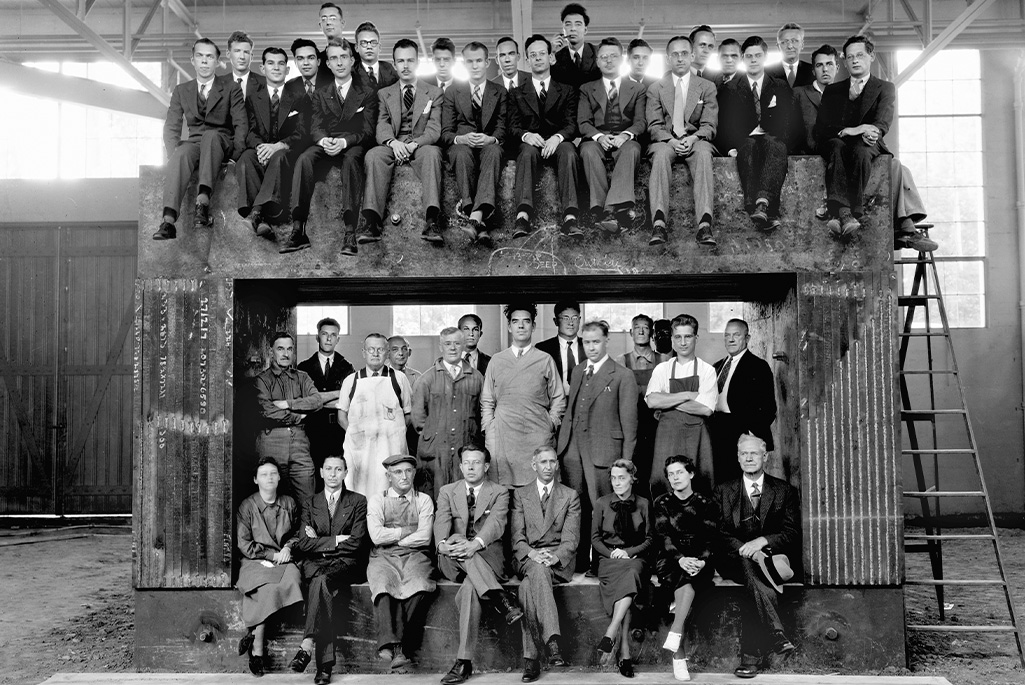
The cyclotron changed science forever. Researchers needed a better way to study atomic nuclei, the building blocks of our world. Invented by Ernest Lawrence in the early 1930s, the cyclotron accelerated particles to unprecedented energies and launched advances in medicine, national defense, and high-energy physics. It won Lawrence the 1939 Nobel Prize in Physics and ushered in an era of giant atom smashers around the world.
But the cyclotron also created something bigger: team science. Years before the Manhattan Project, Lawrence’s lab was already bringing together large teams of physicists, engineers, chemists, machinists, and other experts to build instruments and solve problems no single researcher could on their own. That collaborative model became the foundation for the Department of Energy’s national lab system, including Lawrence Berkeley National Laboratory. Breakthroughs from team science and the cyclotron delivered technologies we still rely on today, including smoke detectors, PET scans, and the smartphone in your pocket.
